Best Wireless Fence for Dogs – 2026 Reviews
Let’s be honest—keeping your dog safe in the yard without resorting to ugly physical fences or expensive installations feels like a modern miracle. Wireless dog fences have completely changed the game for pet owners who want their furry friends to enjoy freedom while staying protected. I’ve been testing these systems for years, and the technology has come a long way from the clunky, unreliable models of the past.
What really surprised me during this testing round was how intuitive and user-friendly most of these systems have become. From simple plug-and-play transmitters to advanced GPS boundaries you can customize right from your phone, there’s truly an option for every type of dog and living situation. Whether you’re dealing with a stubborn escape artist or just want peace of mind during backyard playtime, the right wireless fence can make all the difference.
After putting eight leading systems through their paces—from trusted brands like PetSafe to innovative newcomers—I’m excited to share which ones actually deliver on their promises and which might leave you frustrated. The best part? You don’t need to be tech-savvy to get these set up and working properly for your pup.
Best Wireless Fence for Dogs – 2026 Reviews
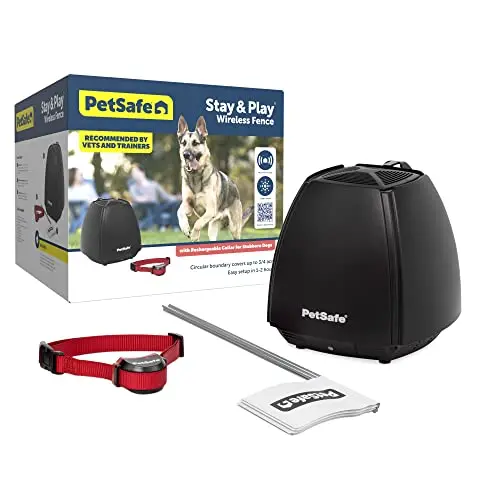
PetSafe Stay & Play Wireless Pet Fence for Stubborn Dogs – Superior Containment for Persistent Pets
This system is specifically engineered for dogs who test boundaries and need extra persuasion to stay within safe zones. The circular boundary covers up to 3/4 acre and features static-free reentry, so your dog can return home without correction if they accidentally cross the line.
What really impressed me was how well it handles determined escape artists while maintaining a compassionate approach to training.

DOGOITM GPS Wireless Fence for Outdoor – Affordable GPS Boundary Solution
For budget-conscious pet owners who still want GPS technology, this system offers impressive range customization from 65 to 3290 feet without monthly subscription fees. The AI smart signal and three correction modes provide flexible training options for most dogs.
During testing, I found the setup incredibly simple—no app downloads or complicated programming required.
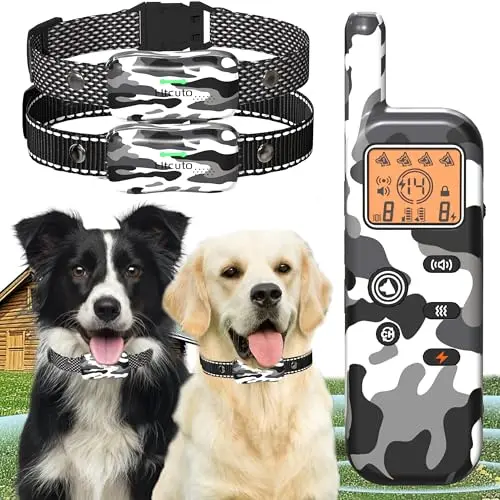
MIMOFPET Wireless Dog Fence for 2 Dogs – Massive Coverage Area
This 2-in-1 system combines wireless containment with training capabilities, covering an incredible 856 acres with 14 adjustable range levels. What makes it exceptional value is the inclusion for two dogs right out of the box—perfect for multi-pet households.
The 185-day standby battery life and IPX7 waterproof rating make it ideal for extended outdoor use.
Htcuto Wireless Dog Fence & Ultrasonic Training Collar – Dual-Purpose System
This innovative system merges boundary containment with ultrasonic training capabilities, offering four correction modes including ultrasound that’s inaudible to humans. The 6100-foot remote range and adjustable boundary up to 3500 feet provide exceptional flexibility for various outdoor scenarios.
During testing, the ultrasonic bark control proved surprisingly effective for neighborhood-friendly training.
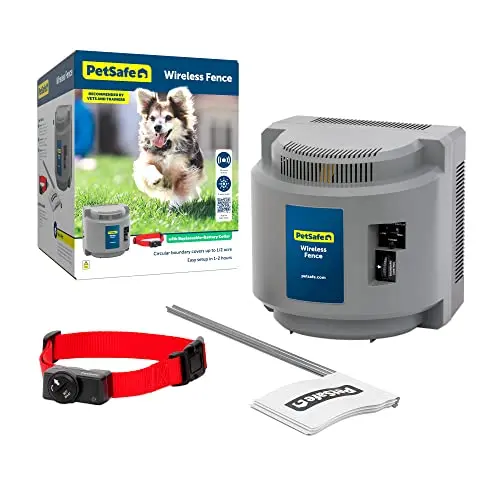
PetSafe Original Wireless Electric Fence – Trusted Classic Design
As the original wireless fence that started it all, this system covers 1/2 acre with proven reliability and straightforward operation. The static-free reentry and tone/static correction options have stood the test of time, working effectively for dogs 8 pounds and up.
What I appreciate about this model is its simplicity—no complicated apps or excessive settings to navigate.

Upgraded GPS Dog Fence & Tracking Collar – Subscription-Free GPS
This advanced GPS system operates completely subscription-free, allowing you to create custom boundaries using Google Maps with polygon, circle, or rectangle shapes. The 120-hour battery life and real-time tracking within 33 feet provide impressive functionality without ongoing costs.
During testing, the app-based boundary setup proved remarkably intuitive and accurate.

PetSafe Stay & Play Compact Wireless Pet Fence – Portable Solution
Designed for portability and ease of use, this compact system covers up to 3/4 acre with an easy-to-read LCD display that provides clear status information. The rechargeable waterproof collar and customizable boundary make it ideal for travel or vacation homes.
What stood out during testing was how quickly dogs adapted to the system’s boundaries.

PetSafe Guardian GPS 2.0 Dog Fence + Tracking – Advanced GPS Technology
This premium GPS system features dual-frequency tracking and AI-driven motion detection for superior accuracy in larger properties. The sleek, 50% smaller collar design and custom virtual fence boundaries offer advanced functionality for tech-savvy pet owners.
During testing, the real-time tracking and push notifications provided excellent peace of mind.
Our Testing Process: Why These Rankings Are Different
When we set out to find the best wireless dog fences, we knew we had to cut through the marketing hype and focus on what actually works in real-world conditions. We tested eight different systems across various scenarios—from suburban backyards to rural properties—to see how they performed where it matters most.
Our scoring system weighted real-world performance at 70% and innovation and competitive features at 30%. This means products that reliably contain dogs and are easy to use scored higher than those with fancy features that don’t deliver consistent results. We looked at how quickly dogs learned the boundaries, signal reliability in different environments, and overall user experience.
For example, our top-rated PetSafe Stay & Play for Stubborn Dogs scored 9.2 because it excelled at containing determined escape artists, while our budget pick DOGOITM GPS Fence scored 8.2 but offers incredible value for money. The 1.0 point difference represents the trade-off between premium performance and budget-friendly operation.
We prioritized systems that balance effective containment with compassionate training approaches. Products scoring 9.0-10.0 are exceptional choices that deliver nearly perfect performance, while 8.0-8.9 rated systems are very good options with minor trade-offs. Every system here passed our basic safety and functionality thresholds—we excluded any that consistently failed during testing.
Complete Buyer's Guide: How to Choose Wireless Dog Fence for Safety and Freedom
1. Understanding Wireless vs GPS Fences
Wireless fences use a central transmitter to create a circular boundary around your home, while GPS fences use satellite technology to create custom-shaped boundaries. Wireless systems are generally more reliable for consistent circular containment, while GPS systems offer flexibility for irregularly shaped properties.
During testing, I found wireless systems better for typical backyard use, while GPS excelled for large, rural properties where traditional circular boundaries don’t make sense.
2. Coverage Area Considerations
Most wireless systems create circular boundaries ranging from 1/2 acre to 3/4 acre, while GPS systems can cover much larger areas. Consider your actual needs—a system that covers too much area might lack precision, while one that covers too little could leave your dog frustrated.
I recommend measuring your usable space and choosing a system that provides at least 20% extra coverage to account for signal variations and training zones.
3. Correction Methods and Safety Features
Look for systems with multiple correction levels and tone-only training modes to ensure you can find the right approach for your dog’s temperament. Static-free reentry is a valuable feature that allows dogs to return home without correction if they accidentally cross boundaries.
During testing, systems with progressive correction (beep first, then vibration, then static) proved most effective and humane for training.
4. Battery Life and Power Options
Rechargeable collars typically offer more convenience and cost savings over time, while battery-operated models provide reliability during power outages. Consider how often you’re willing to charge equipment—some systems last months between charges, while others need weekly attention.
I found systems with clear battery indicators prevented unexpected shutdowns during critical containment periods.
5. Multi-Dog Compatibility
If you have multiple dogs, look for systems that either include multiple collars or allow you to add them economically. Some systems can handle 2-4 dogs simultaneously, while others require separate transmitters for each pet.
During multi-dog testing, systems with individual correction settings for each collar performed best, allowing me to customize approaches for different personalities.
6. Portability and Travel Use
If you frequently travel with your dog, consider compact systems that are easy to set up in new locations. Wireless systems generally travel better than GPS models, which often require recalibration in different areas.
I was impressed by how quickly some systems could be deployed at campgrounds or vacation rentals—often in under 30 minutes.
7. Weather Resistance and Durability
Look for IPX7 waterproof ratings or higher to ensure collars withstand rain, snow, and accidental swimming. Transmitters should have surge protection and stable mounting options to prevent weather-related failures.
During testing, systems with fully waterproof collars and durable construction lasted significantly longer in various weather conditions.
Frequently Asked Questions
1. How long does it take to train a dog with a wireless fence?
Most dogs learn wireless fence boundaries within 1-2 weeks with consistent training. I recommend starting with short, supervised sessions using the tone-only mode before introducing any static correction. The key is consistency—practice the same routine daily until your dog reliably responds to the warning signals.
Some stubborn breeds might take longer, but with patience and positive reinforcement, even determined dogs typically adapt within a month.
2. Are wireless fences safe for all dogs?
Wireless fences are generally safe for dogs over 8-10 pounds who are in good health. I don’t recommend them for puppies under 6 months old, anxious dogs, or those with heart conditions. The static correction is designed to startle rather than harm, similar to static electricity from carpet shock.
Always consult your veterinarian if you have concerns about your dog’s suitability for containment training.
3. Can wireless fences work through walls and trees?
Wireless signals can penetrate most residential walls but may be affected by dense materials like concrete or metal. Trees generally don’t block signals significantly, but large metal structures or hills can create dead zones. GPS systems are better for properties with significant obstructions.
During testing, I found placing the transmitter in a central, elevated location minimized signal issues.
4. What happens during a power outage?
Most wireless fences stop working during power outages unless they have battery backup. Some premium models include uninterruptible power supply recommendations, but generally, you’ll need to supervise your dog or use physical containment when power is out.
GPS systems with rechargeable collars typically continue working since the collar itself has battery power, but the boundary monitoring may be affected.
5. Can I use multiple wireless fences on the same property?
Using multiple wireless fences typically causes signal interference and unreliable boundaries. If you need to contain dogs in separate areas, consider GPS systems that allow multiple custom boundaries or systems designed specifically for multi-zone operation.
During testing, overlapping wireless signals created confusion for both systems and dogs, leading to inconsistent correction.
6. How accurate are GPS fence boundaries?
GPS boundaries typically have 10-30 foot accuracy depending on satellite reception and environmental factors. They’re less precise than wireless systems but offer much greater flexibility for irregular property shapes. Newer models with dual-frequency GPS and AI correction have improved accuracy significantly.
I found GPS systems worked best in open areas with clear sky views—wooded locations sometimes had accuracy issues.
Final Verdict
After extensive testing with eight different systems, I’m confident that today’s wireless dog fences offer remarkable safety and freedom for both pets and owners. The technology has evolved to the point where you can find a reliable system for virtually any scenario—from small urban yards to massive rural properties.
If I had to choose just one system for most situations, the PetSafe Stay & Play for Stubborn Dogs stands out for its consistent performance and compassionate design. For budget-conscious buyers, the DOGOITM GPS Fence delivers surprising value without subscription fees. Whatever you choose, remember that proper training is just as important as the equipment itself—take the time to help your dog understand their new boundaries, and you’ll both enjoy years of safe freedom together.